

REBECCA L. RHOADES
Downtown Mesa again sparkled from the brilliant light of vibrant, glowing signs with bold designs. Numerous neon signs beckon visitors to hotels, restaurants, financial spaces, and bars along Main Street. The signs were left to rust and peel in Mesa and other cities throughout the nation, forgotten in warehouses, or perhaps abandoned by the later 20th century.
However, in recent years, a revival of the midcentury style and Americana symbols has resulted in renewed interest in neon signage, and thanks to a collaboration between the city and the Mesa Preservation Foundation, Main Street’s light artworks are once again dazzling the skyline.
The Neon Garden first appeared in mid-century 2025. The Post, a attentive reimagining of a historic 1936 landmark that was once the city’s first post office, is a part of Mesa’s central community event space.
Sierra Signs &, Services, based in Mesa, was in charge of getting the vintage fixtures back to their original beauty.
Teri Davis, owner of Sierra Signs, claims that” the signs were kept in a graveyard.” We repainted them, sanded them, and brought them back to life. To meet contemporary engineering standards, some signs demanded the addition of fresh fundamental components, such as steel poles.
” We made an effort to keep everything as unique as possible,” Davis says. That includes using contemporary Lead lights instead of neon. Contrary to popular belief, neon gasses do no harm the environment, but they do use more power than LED lights. The Garden is just illuminated during events as a result.
The Neon Garden is decorated with five vintage signs from well-known Mesa businesses.
The western-themed restaurant sign by Bill and Gene Johnson was adorned with a Texas longhorn on Main Street from 1977 until 2018, when it was given to the Mesa Preservation Foundation.
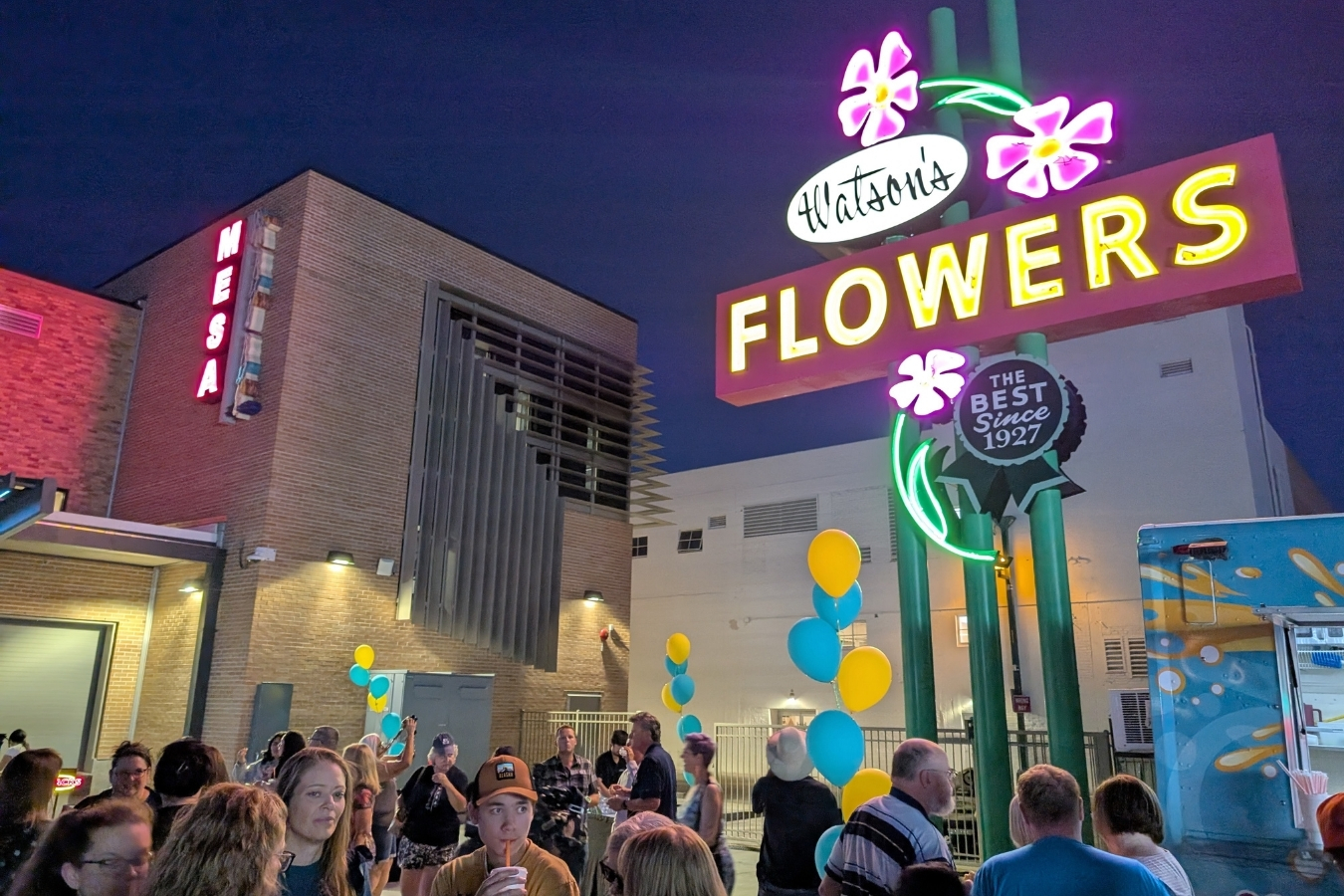
This iconic sign, which was produced by famous local sign maker Paul Millet, stood at the West Main Street flower shop from the late 1950s until it fell apart during a 2014 windstorm. It is 30 feet tall and features vibrant bright blooms.
The second Dairy Queen: Mesa location for the well-known soft-serve ice cream company opened on Main Street in 1949. Leroy Signs in Brooklyn Park, Minnesota, produced this classic porcelain enamel neon sign that remained perched atop the structure until the restaurant’s demise in 2018.
The classic orange oval used by Smiley Ford was most likely constructed around 1960 when Smiley-Berge Motors relocated to Main Street.
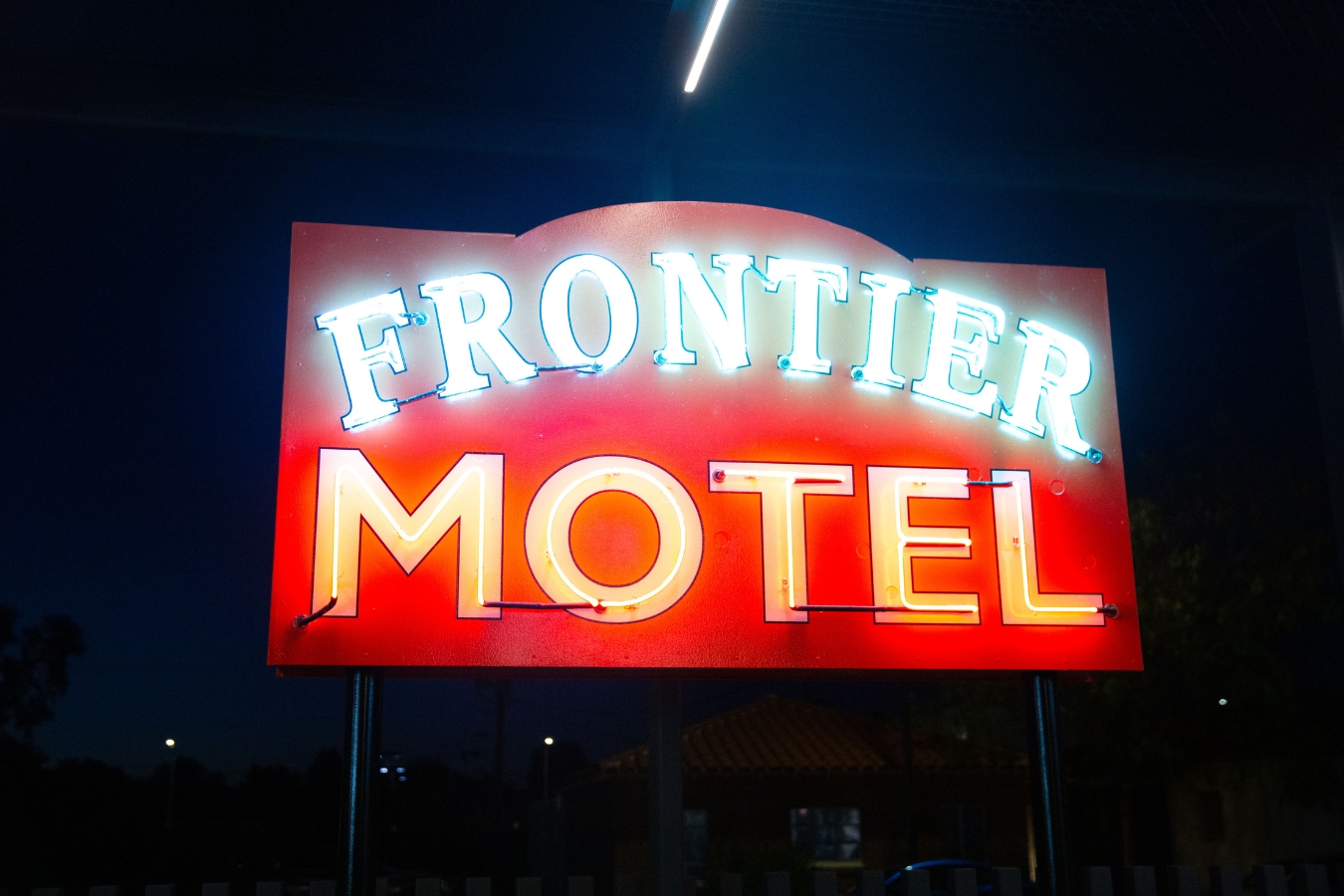
By the 1950s, there were more than 50 motels along Main Street, including the Frontier Motel. The motel had long-term guests for winter thanks to its U-shaped layout and parking lot in the center. Its sign probably dates back to the property’s beginning.
The famous Swimming Lady is one of Mesa’s most recognizable and well-known signs, and the replica of that sign even hangs in the Neon Garden. The 60-foot sign promoted a swimming pool at the Starlite Motel and was built in 1960 by neon artist Paul Millett and signmaker Stanley Russon. It was destroyed by a storm in 2010 and rebuilt in 2013. What is the last remaining animated neon sign in the Phoenix urban area is commemorated in the smaller replica at the Neon Garden. The Post’s roof’s modern neon name sign increases the collection.
The City of Mesa’s Parks, Recreation, and Commercial Facilities Director, Marc Heirshberg, describes the phenomenon as “magical when the sun sets and those signs light up.” It’s a particularly beautiful environment to visit.
He continues,” The Post and the Neon Garden honor our history’s roots with courteous reuse and presentation of the signs.” They create a special gathering place that reflects the community’s commitment to upholding our past while advancing our future.